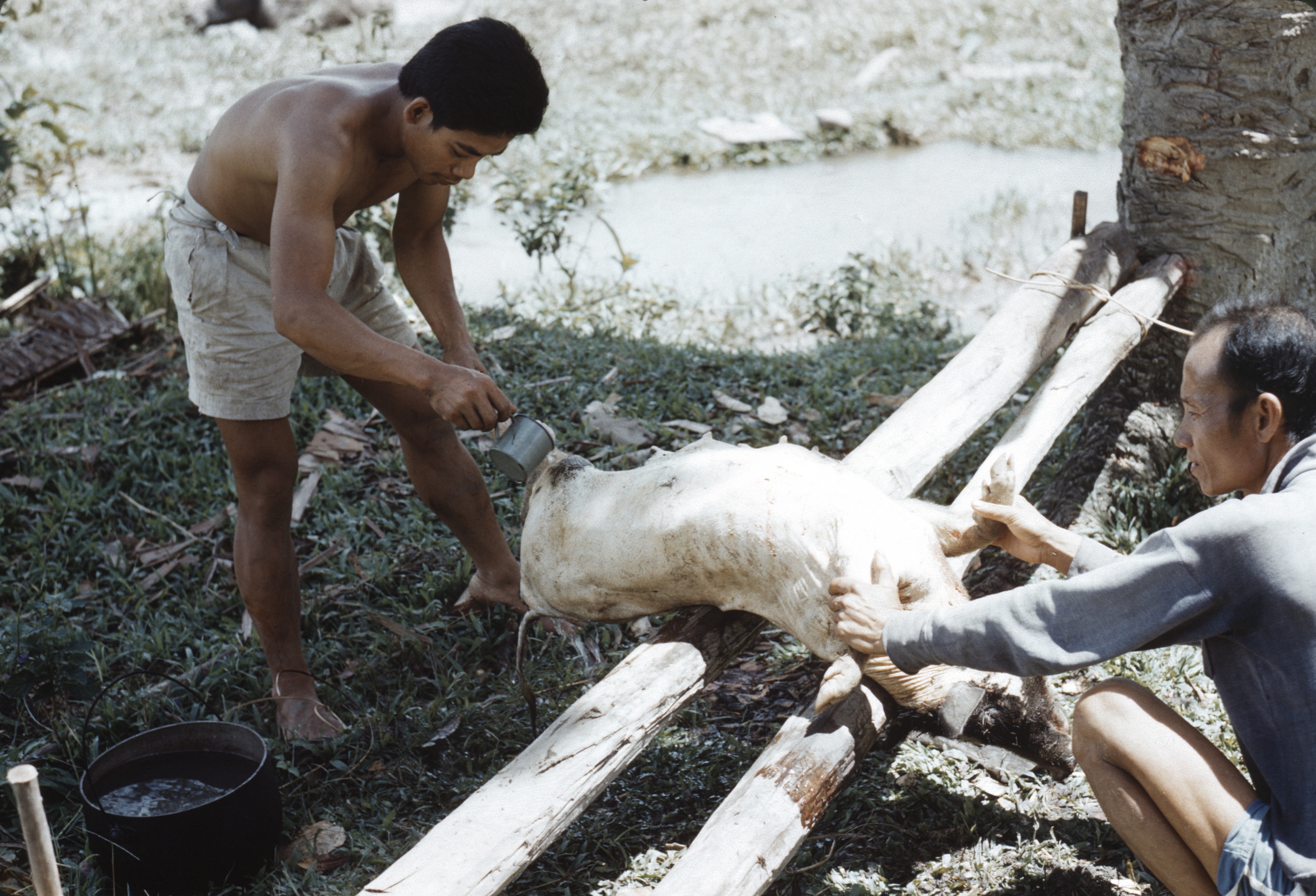
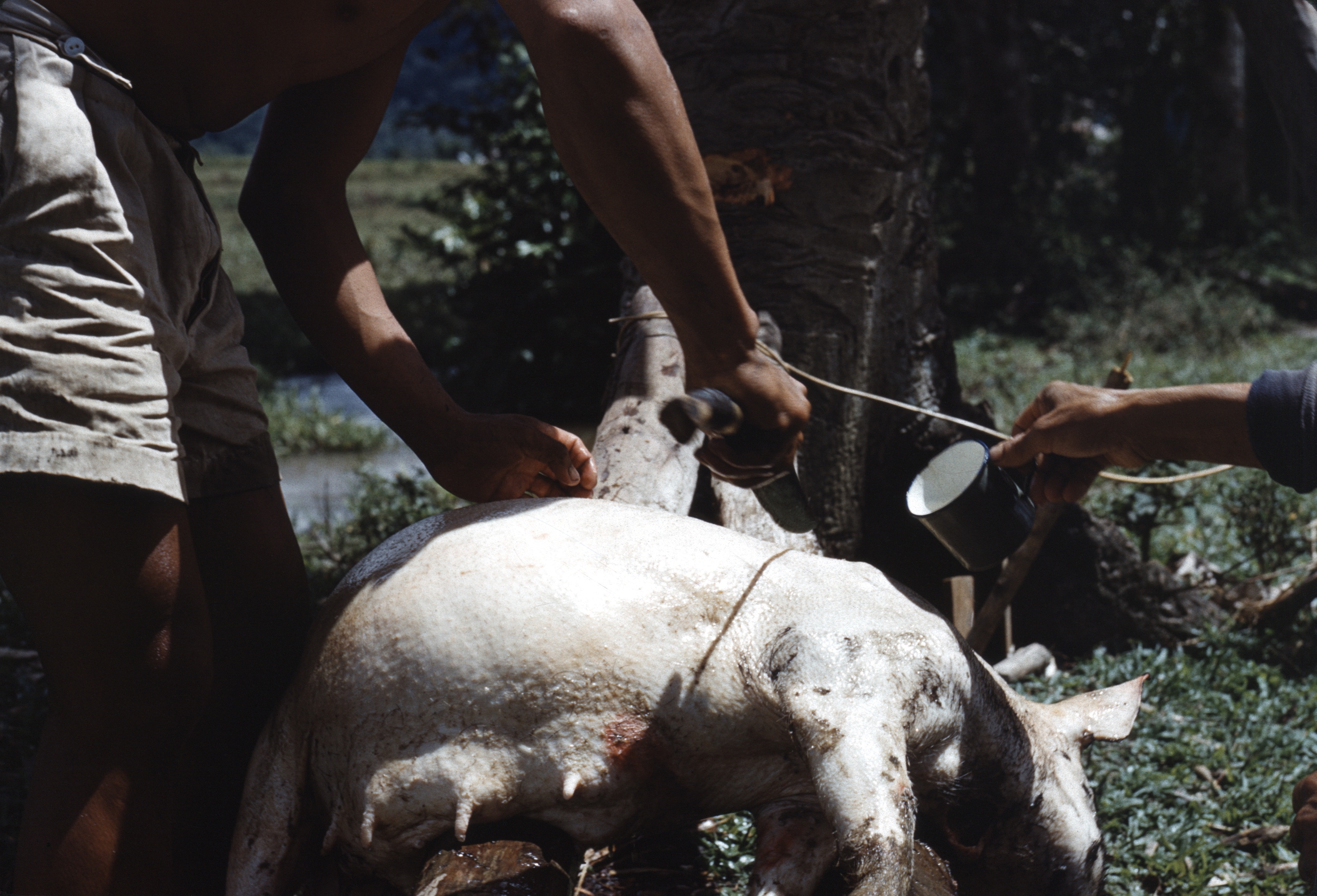
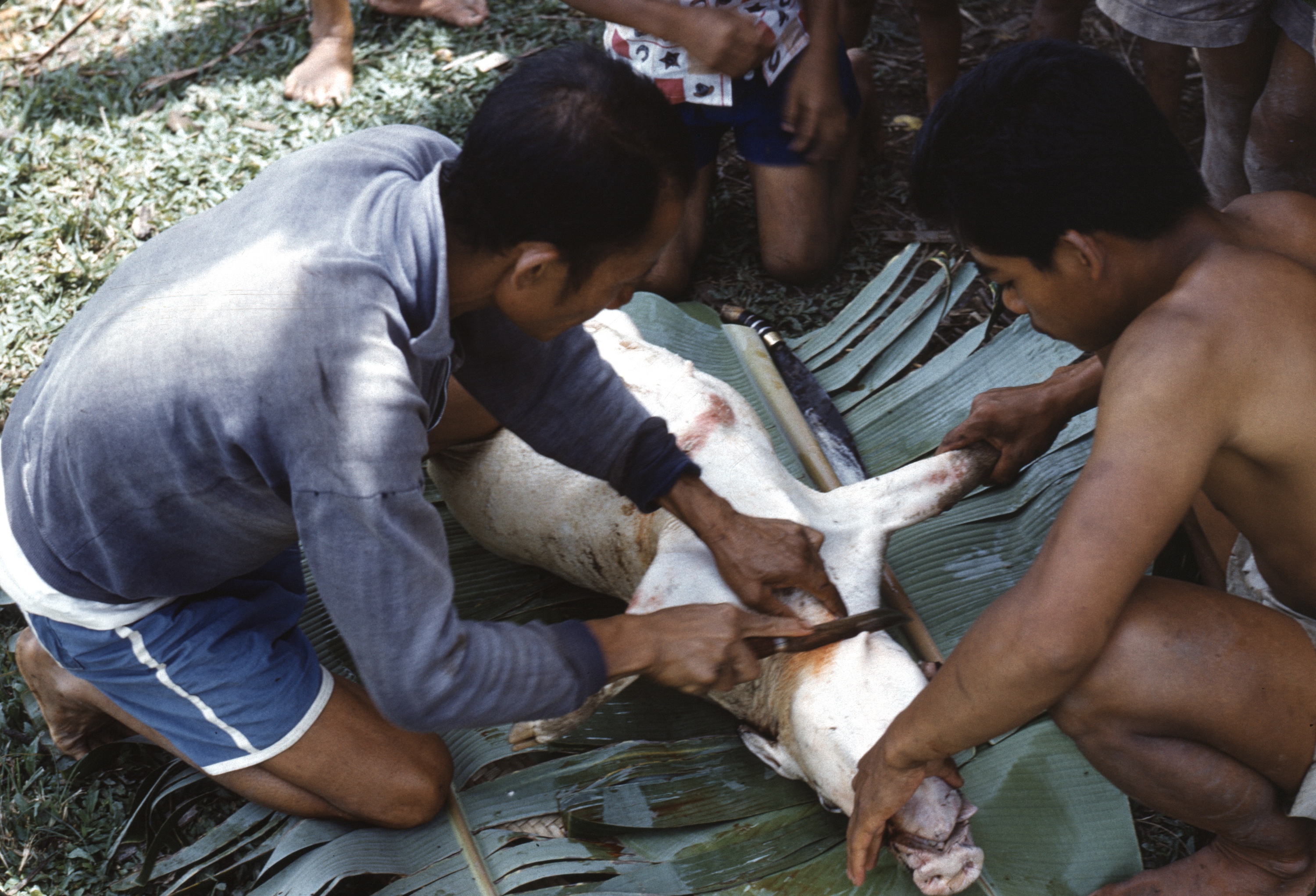
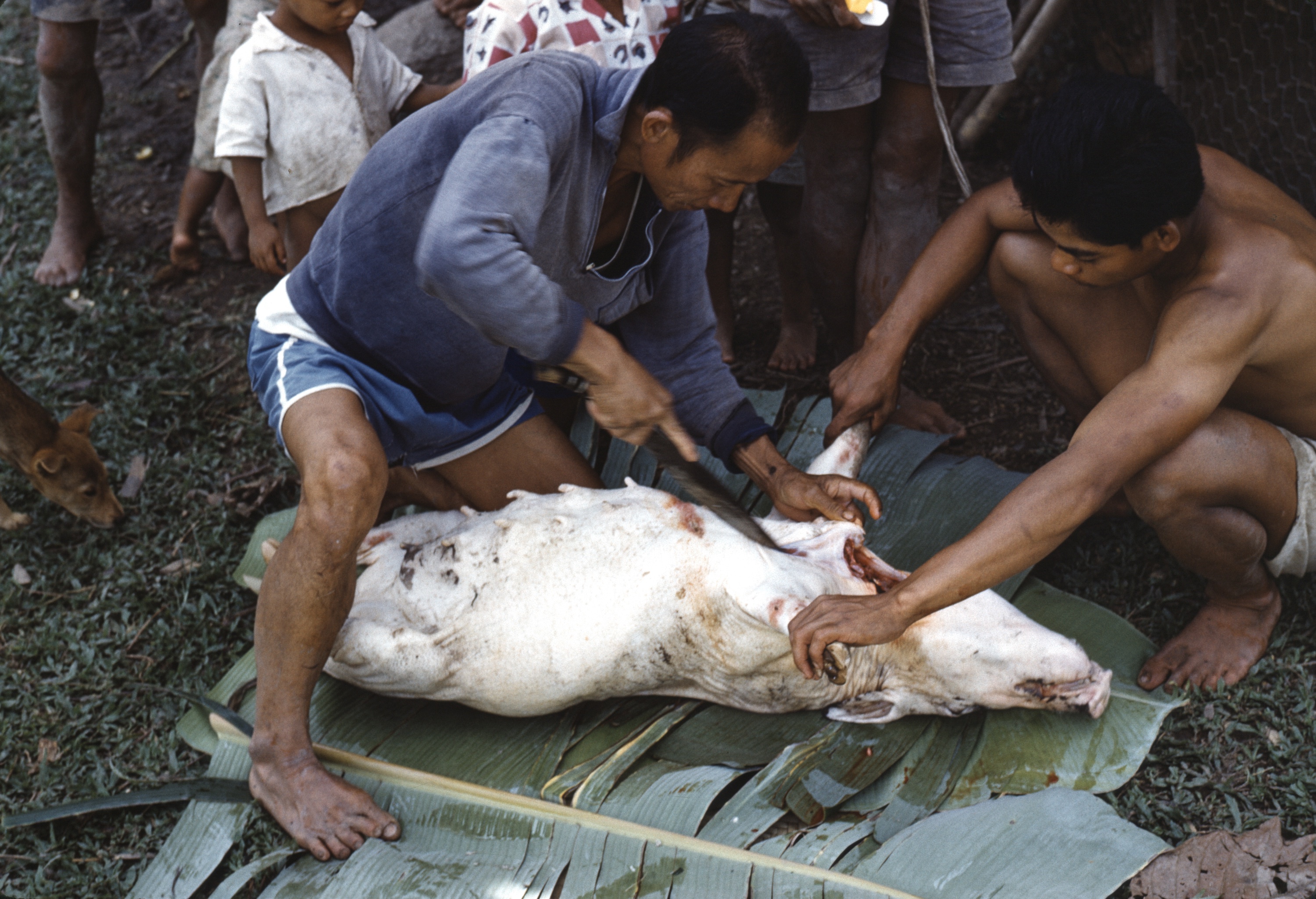
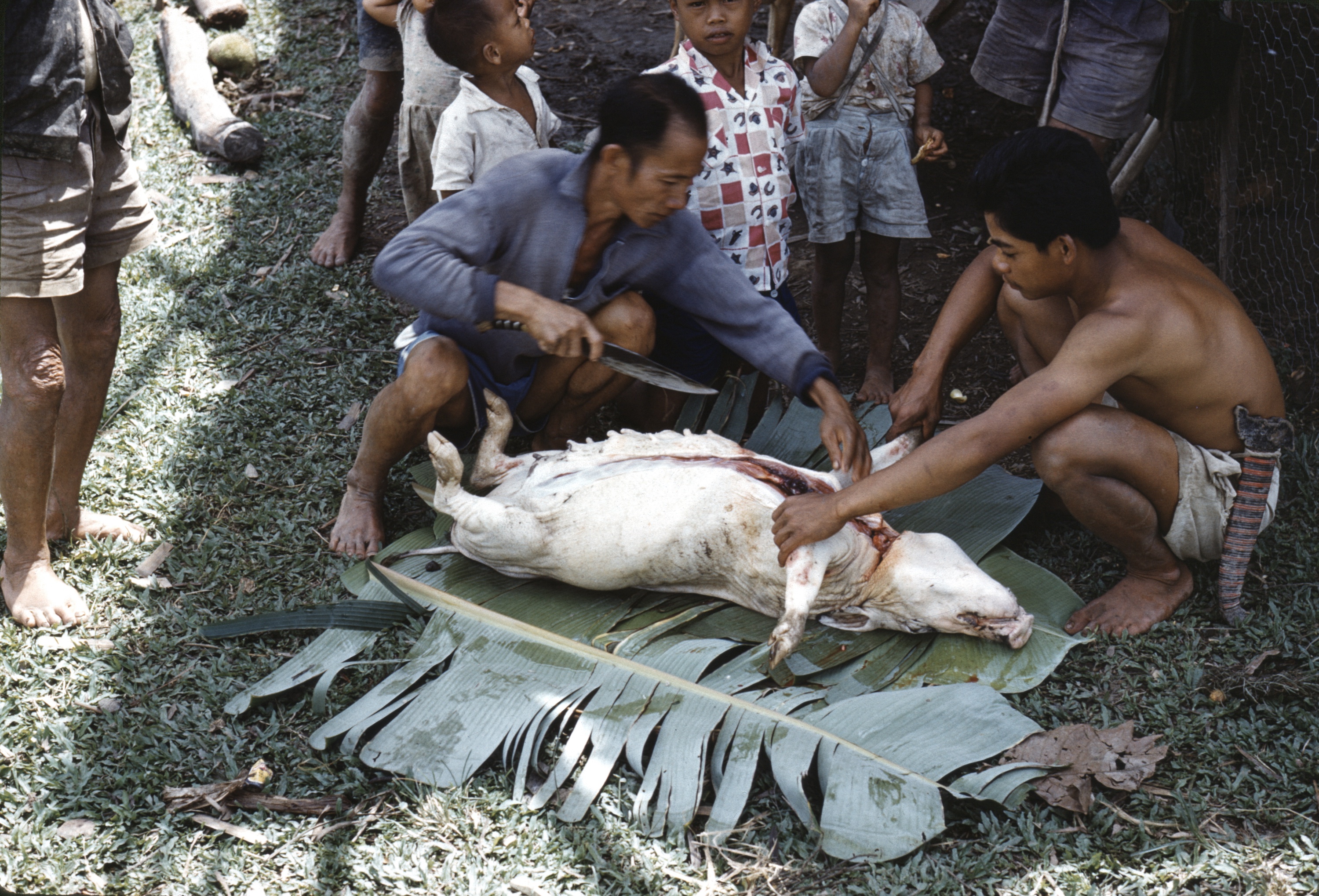
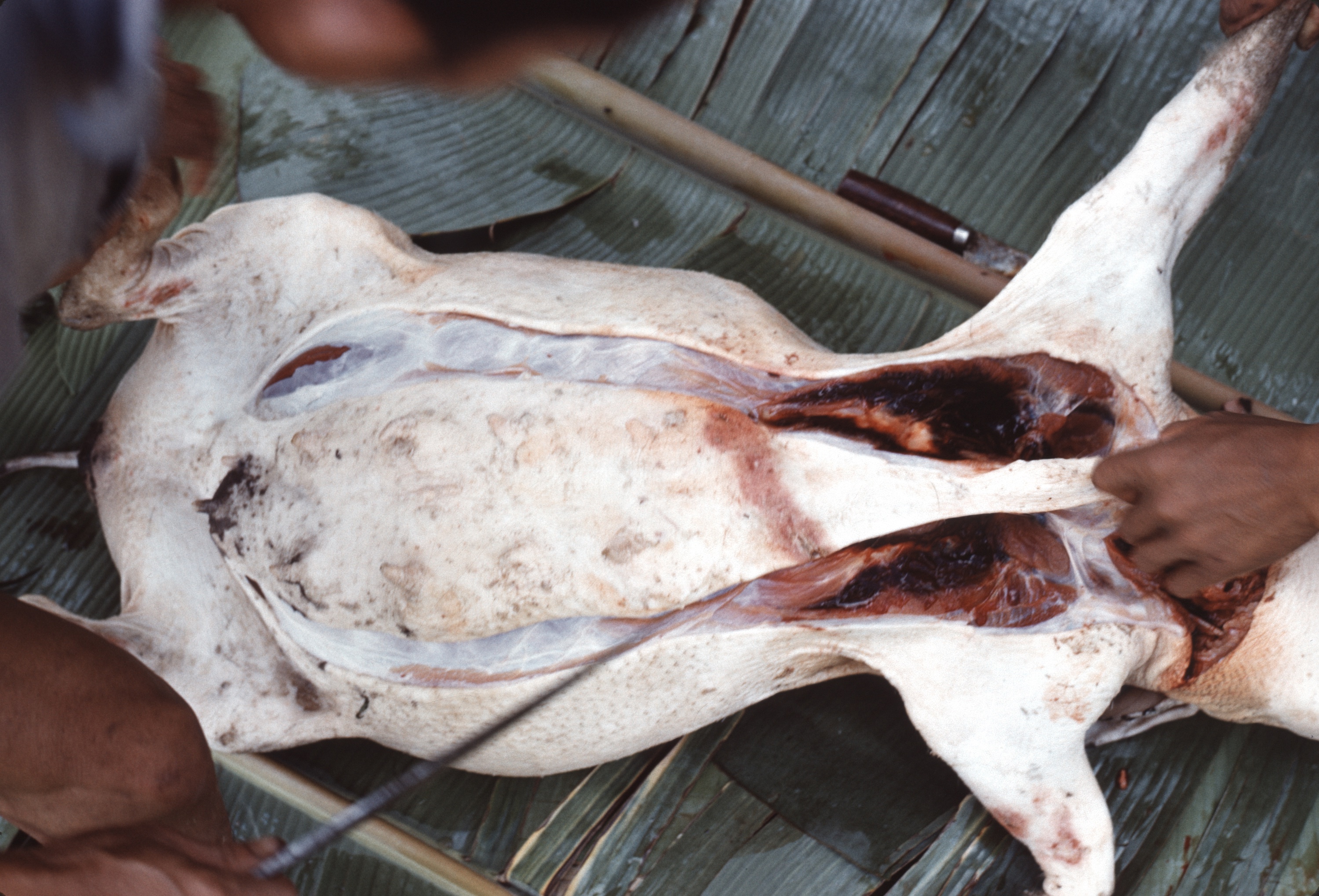
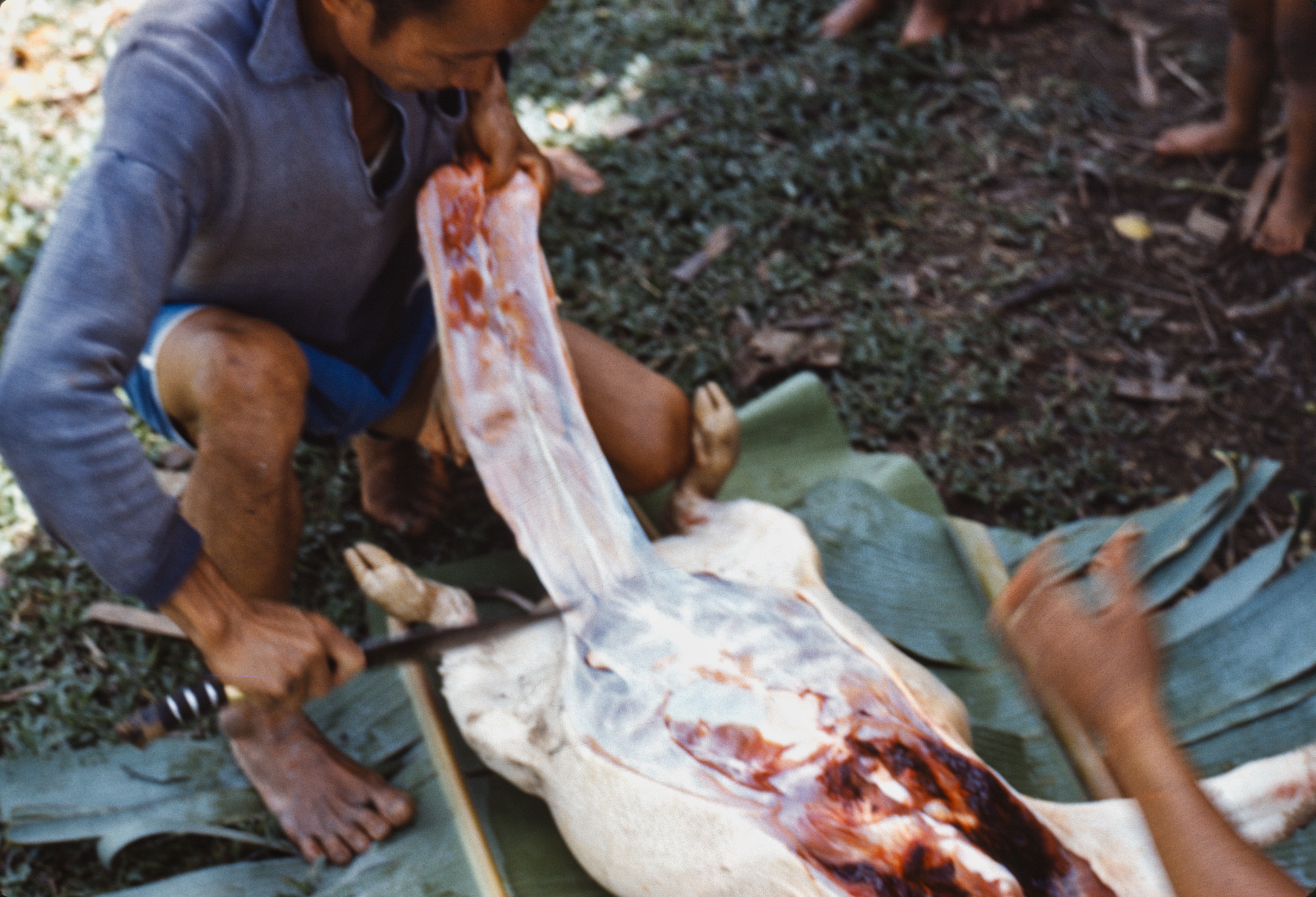
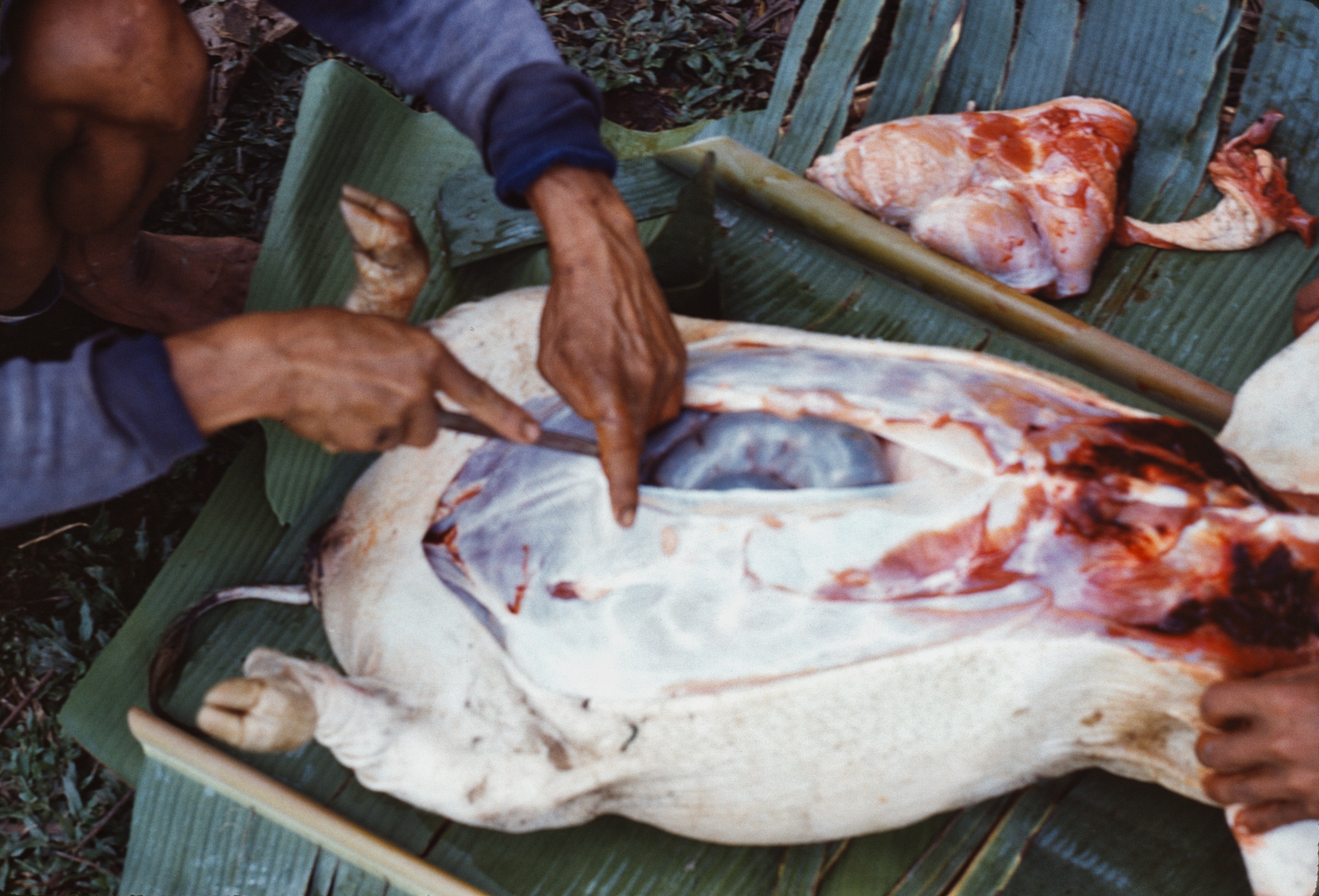
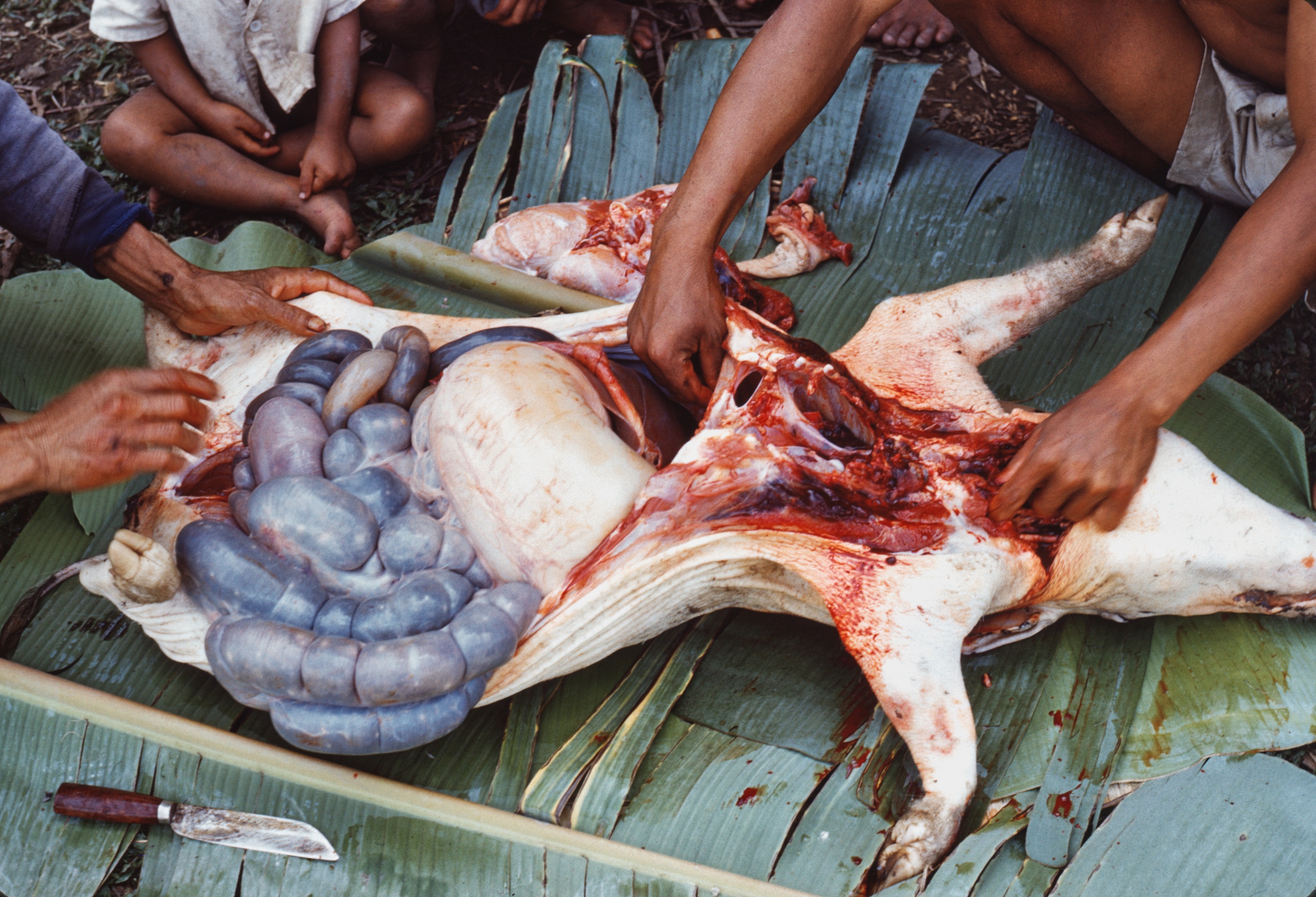
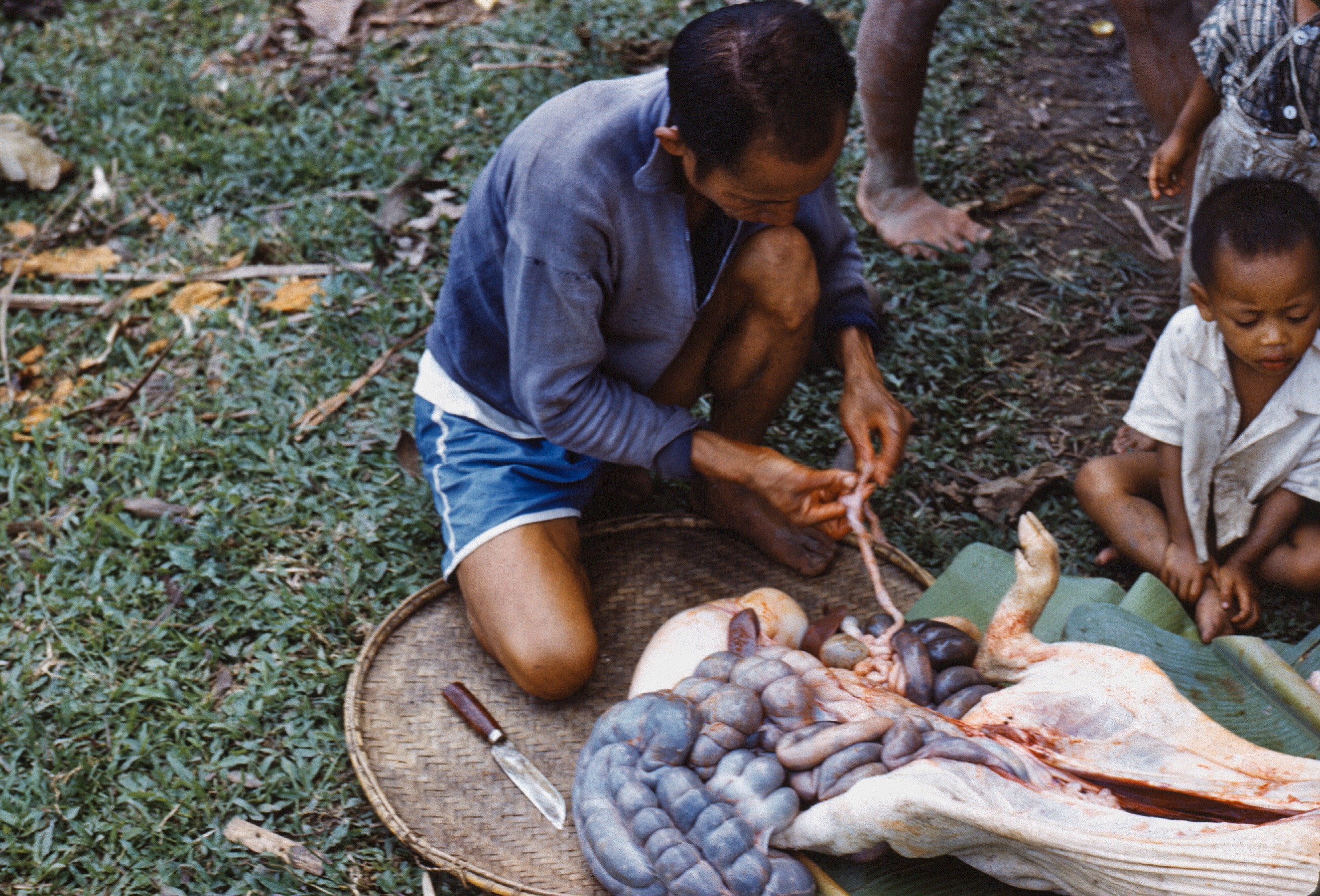
Warning, don’t look any further if you don’t want to see a pig butchered and dressed.
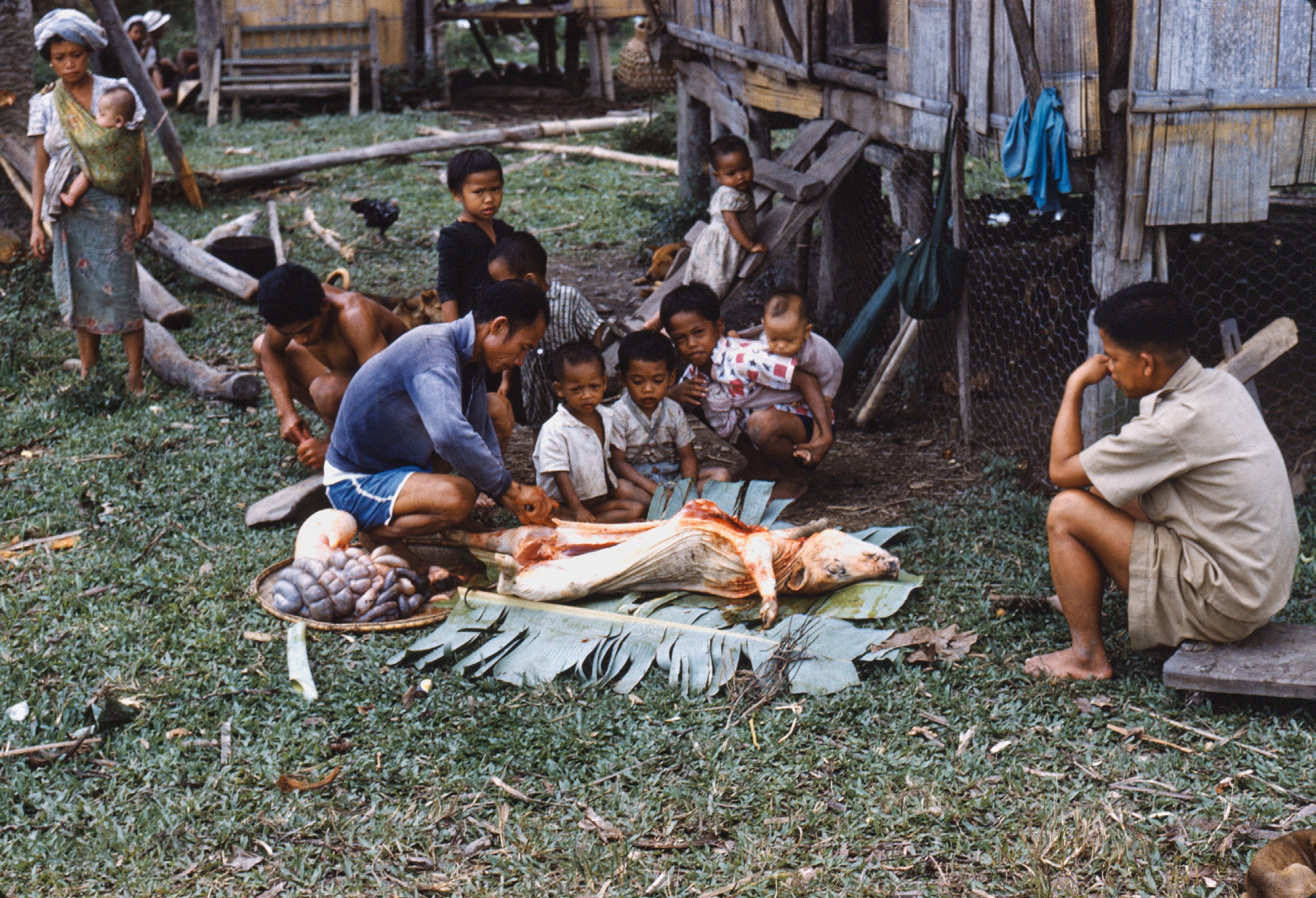
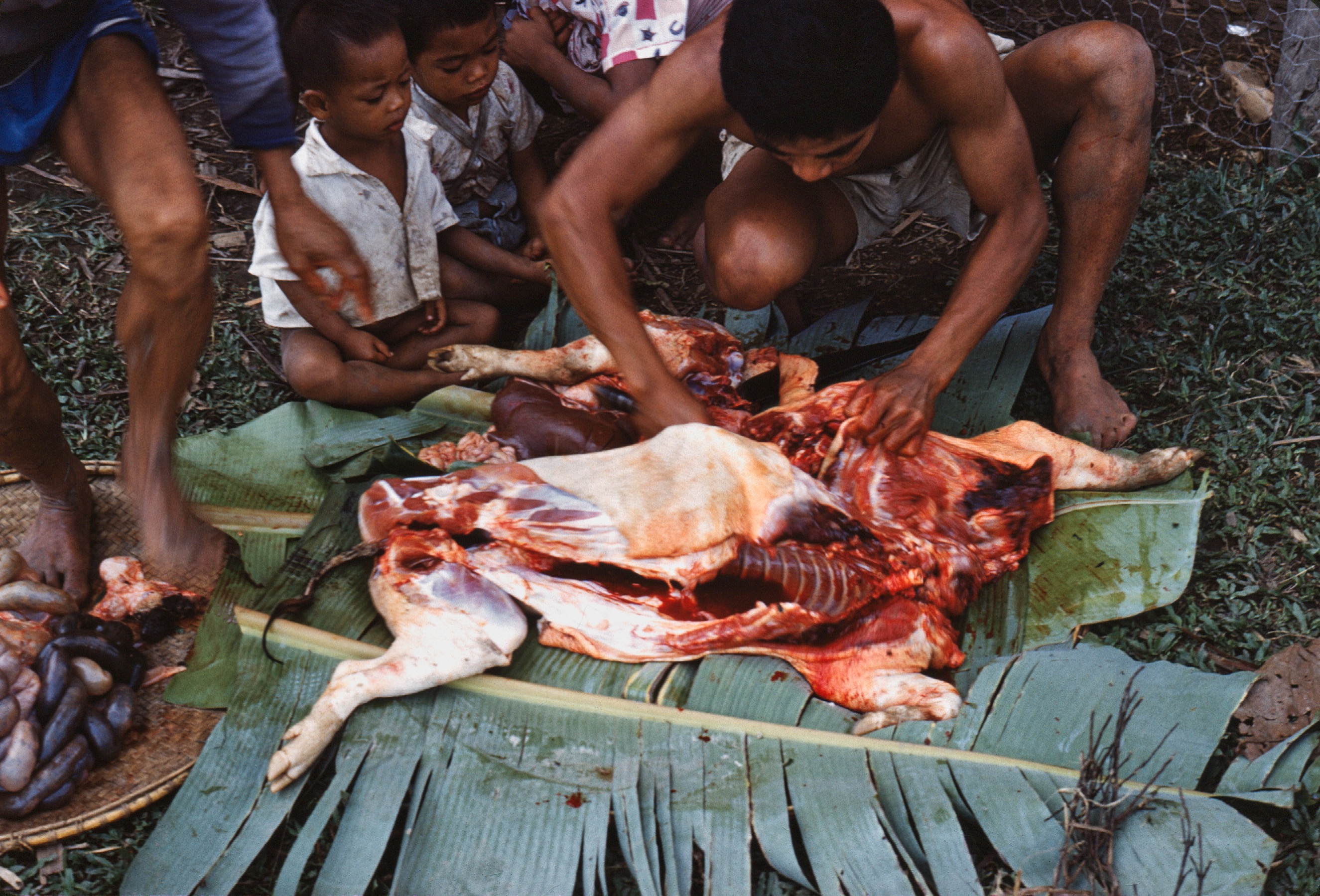
This was a very normal occurrence when I was a child in Borneo. There were no grocery stores and if you ate animal you saw them butchered and prepared. I have to say that I think this probably healthier overall for everyone. I’m not arguing for or against eating meat…though I do eat it myself. I am, however, suggesting that seeing that something died so that you could eat it is probably a much better way of understanding just what is involved, especially if you helped raise that animal, than buying anonymous meat products at a grocery.
Later, as a teen, I’d work on a cattle ranch for summer and that was pretty much the same when it came to a relationship with animals destined for slaughter. We were grateful for their meat, and for the money they brought.
You’ll note in these images the progression of skills. There’s an older man, though he’s probably much younger than I am today, in charge. A younger man, a teen, doing a lot of the work. And then there are children of all ages watching and participating to one degree or another. It’s serious business and everyone seems to recognize that. Yes, there’ll be feasting, but first there’s work, and death.
Every bit of the pig will be used for something in the long run. The intestines that are pulled out won’t be discarded, they’ll be cleaned and used. I’m sure the pig was not happy about it’s outcome, but none of it will be wasted. No comfort to the pig perhaps, but some to those doing the killing and preparation.
Borneo photo set KC4…
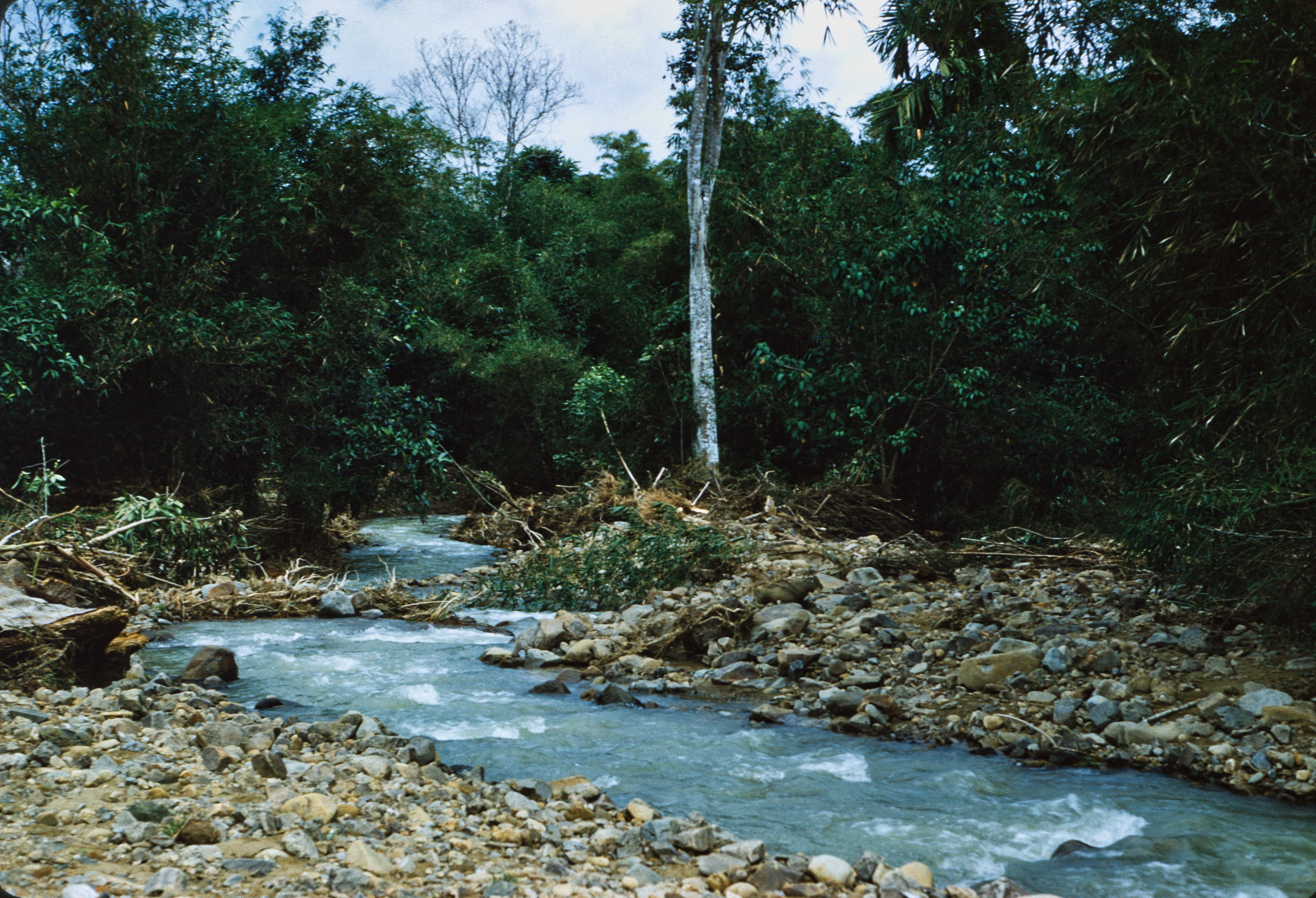
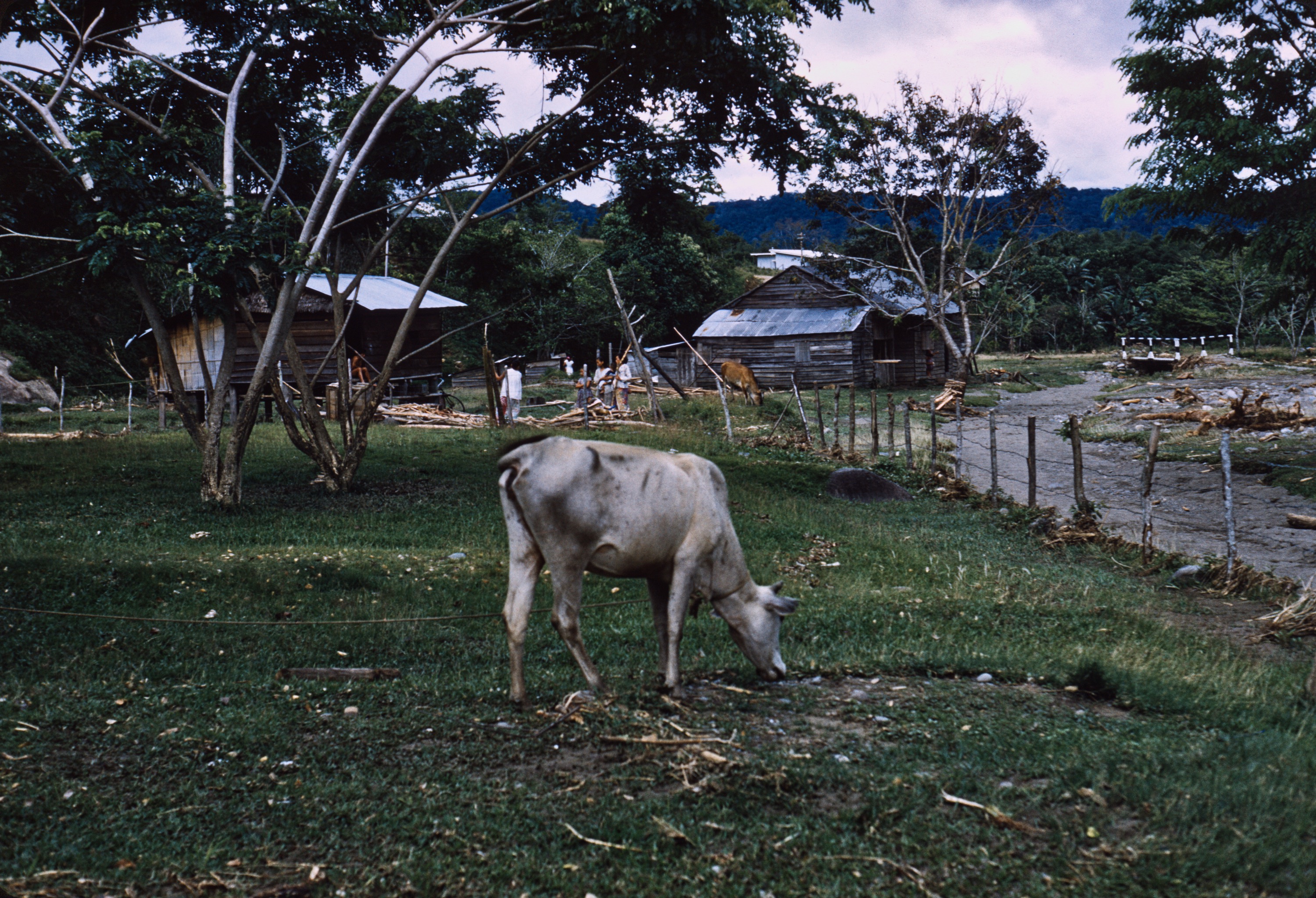
I’m not at all sure what KC4 meant to my dad so I’m not sure why these photos are grouped together. The first is a streamed, the second shows animal husbandry, and the last two are of a valley with dwellings.
Here’s what I think though…
The stream is similar to many mountain streams I recall. As you can see by the debris a lot of water comes down this bed when rain strikes. I recall my dad talking about water barreling out of the mountains down stream beds that sounded like freight trains.
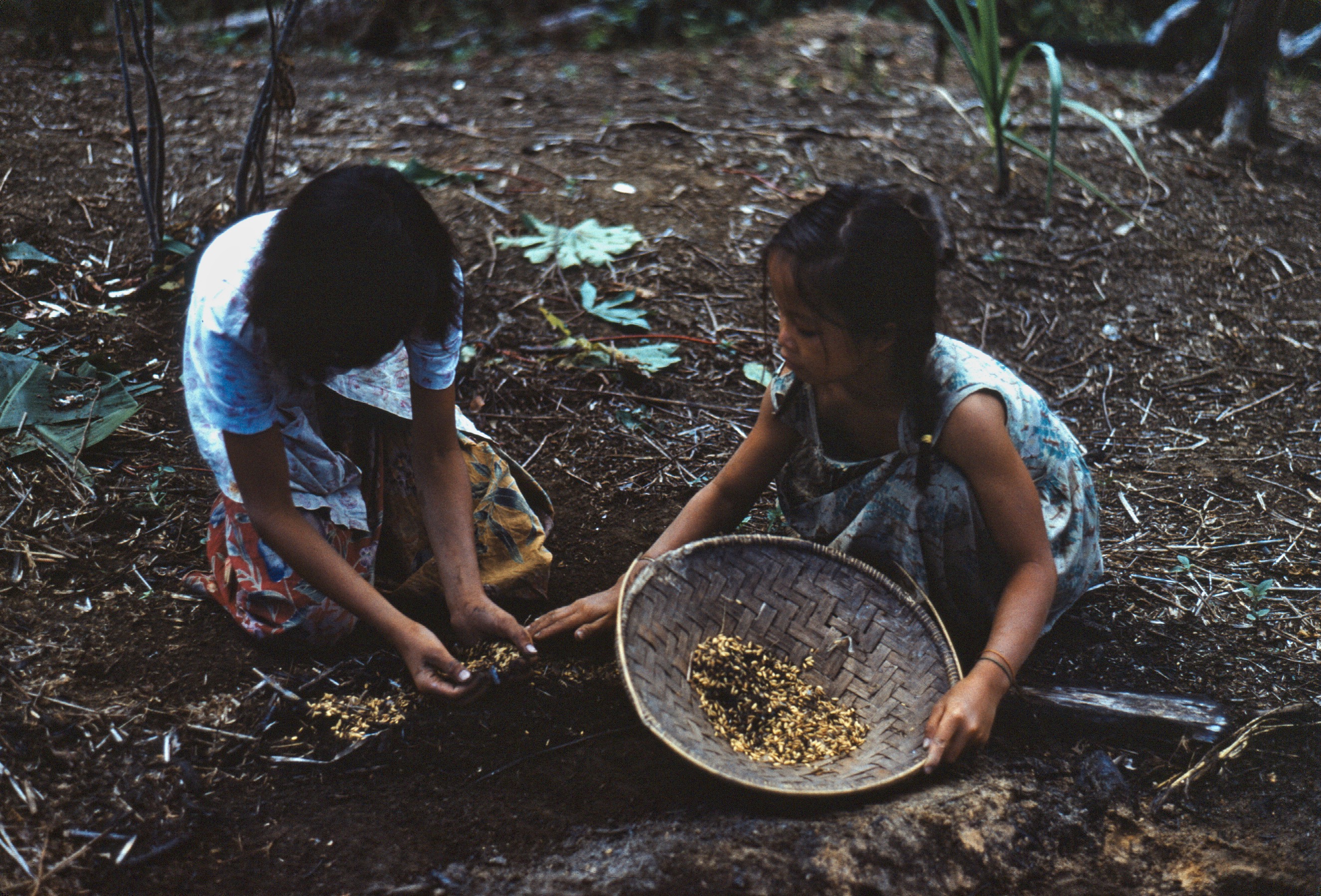
The next slide shows folks taking care of animals. While I saw a lot of water buffalo (carabao), I don’t recall many other large animals, though dogs, chickens, and pigs could be found.
The next two seem to be off more or less the same valley. The last image is a bit out of focus, but I’m including it because it’s part of the set.
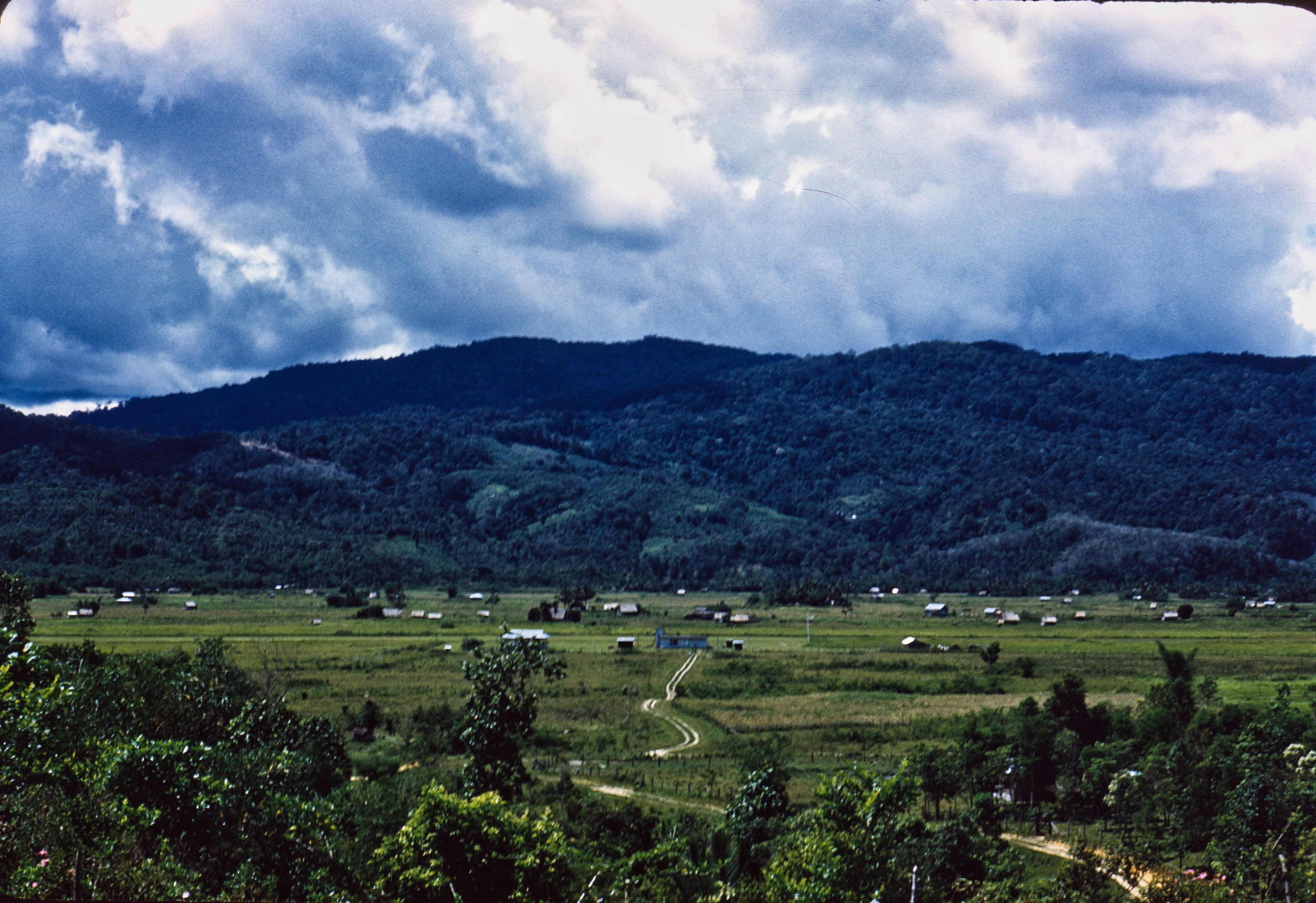
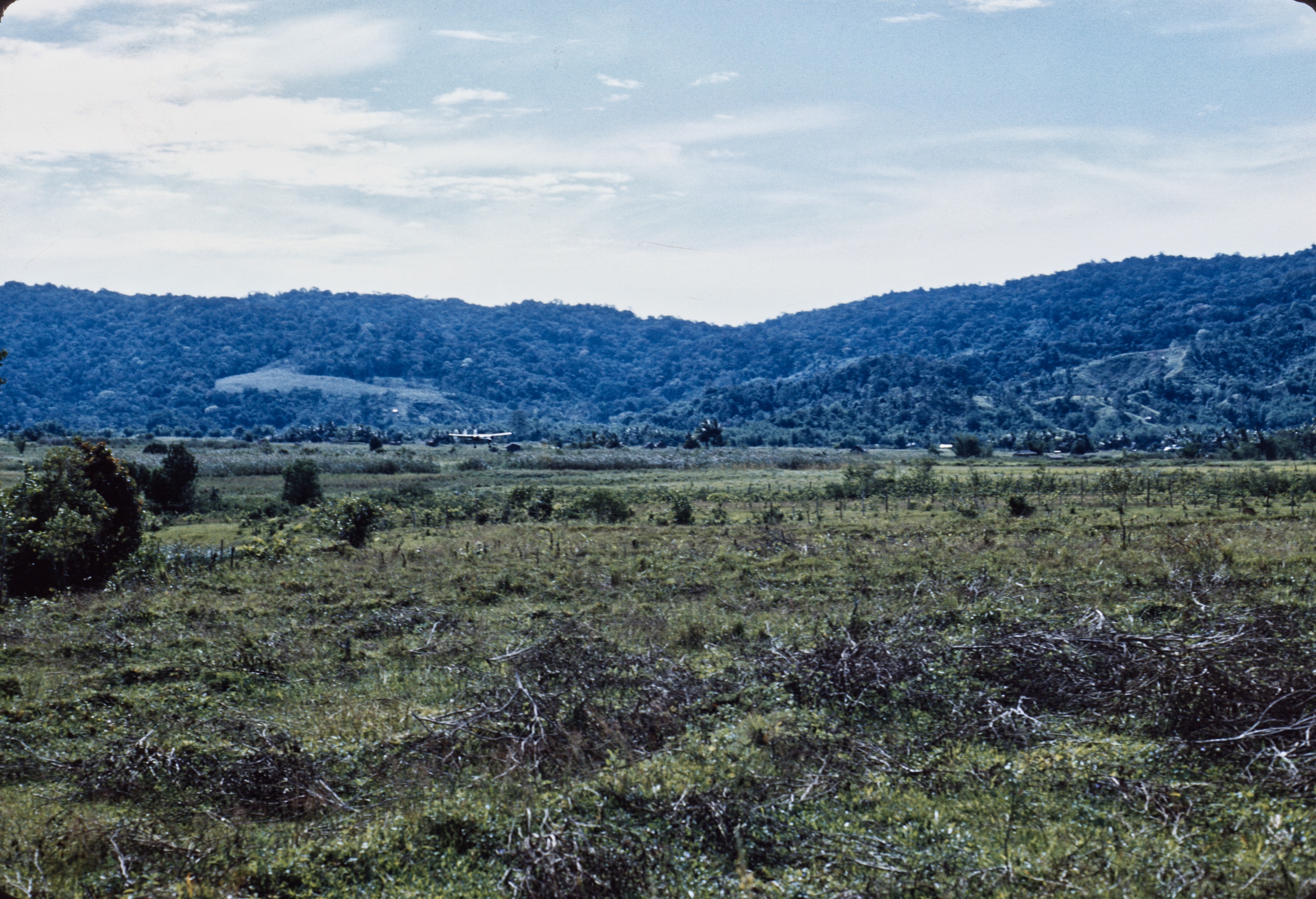
I don’t have a real explanation for these shots, though I do recall walking to school each day (yes, I went to school while there along with all the other kids) and the school was on flat land. I learned long division at age five as I recall and had a very hard time when I got back to the U.S.A. because I wasn’t supposed to know it in the grade I entered into…they didn’t know what to do with me.
Photographing Diamond Head…
I’m talking a walk with my little cameras, probably, and I do wish I could remember, my Olympus XA or Rollei 35 SE…both small and I see a chance to do a bit of meta-photography. That is, photography about photography. I also like the composition. Could it be better….yep, but this is what I got and I’m not unhappy with it.
Not much to say about it, Agfa Vista Plus 200, small camera, no hurry. Have fun!
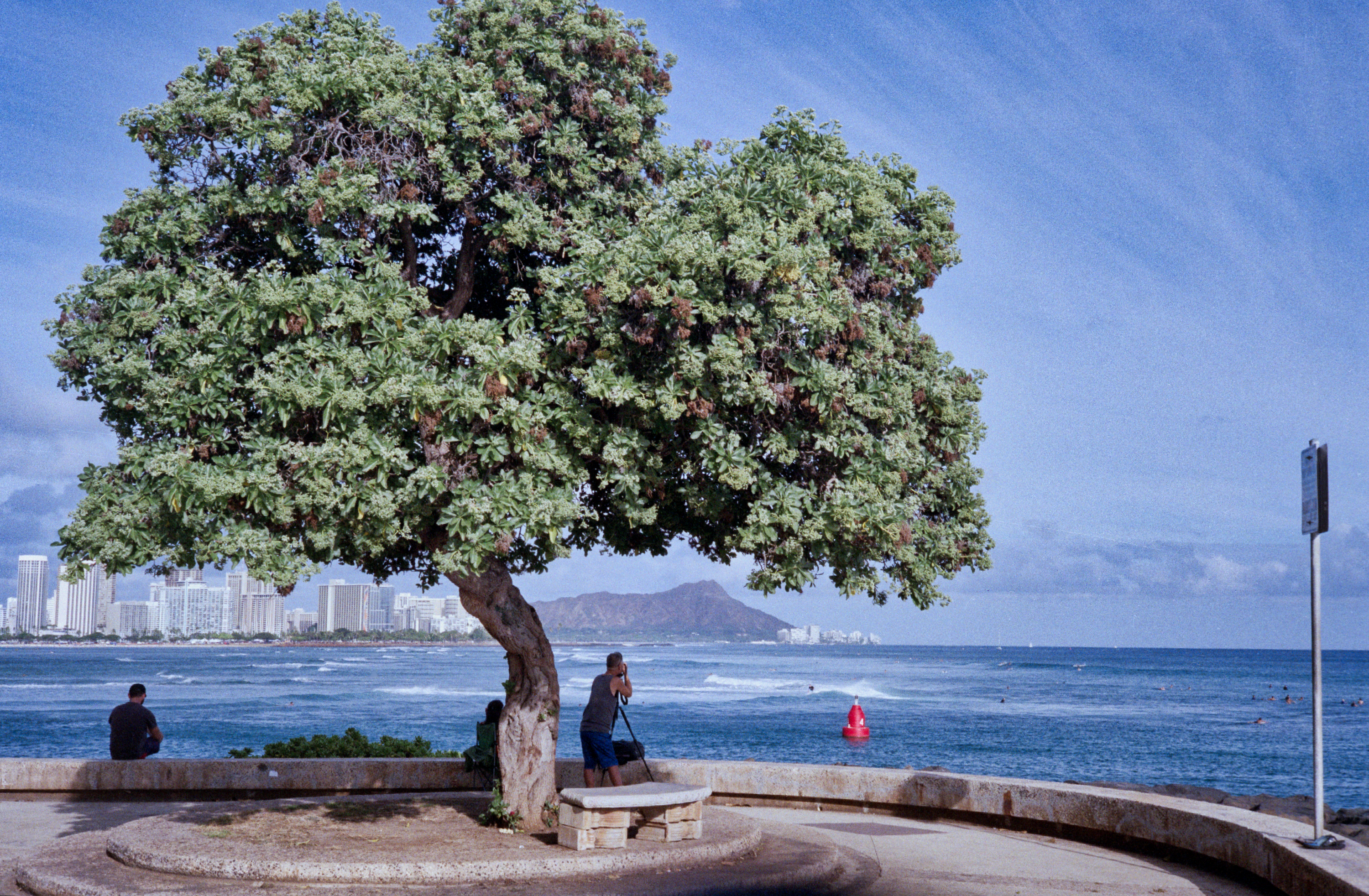
I did tweak it a little after after scanning. I had to get the ocean reasonably straight…not too much lost, and upped the clarity a bit. I’m currently trying a number of different programs and no, while I do believe in getting the shot right in the camera (at last composition-wise), I’m okay with tweaking a little. I seem to remember a lot of dodging and burning with B&W film back in the day…the Photoshopping of the era if you will.
Aloha from Hawaii!
Shower trees on a grey day…
These trees, which we have everywhere in our neighborhood, are truly lovely in bloom, especially on a grey day. It was lunch time, I was out for a quick walk to get out of the office and the park, currently fenced off, looked inviting.
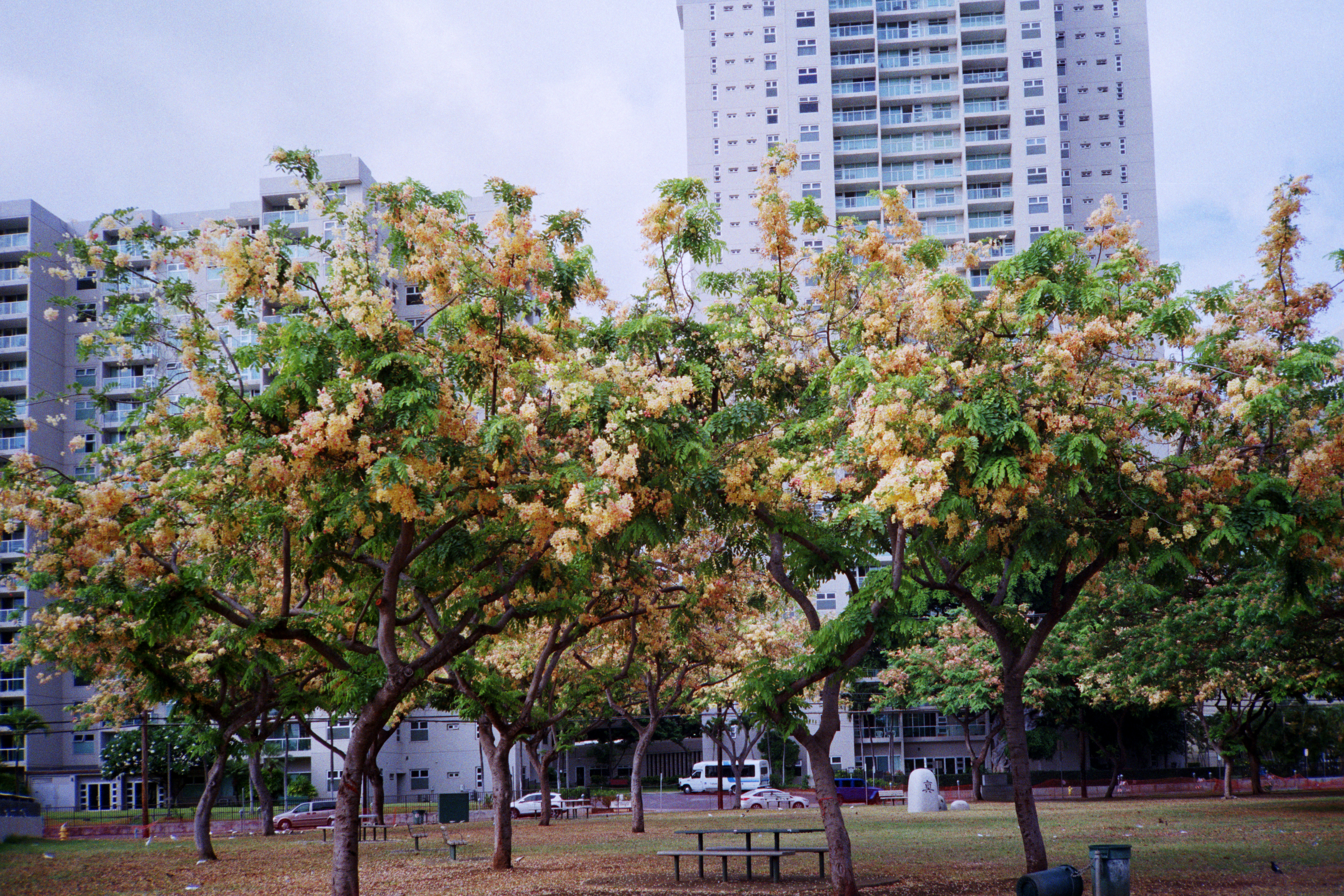
I took this on break using a film camera, Agfa Vista 200. The camera was either my … oh damn … I really need to take better records. My guess is that it’s my Rollei 35 SE, but it could be my Olympus XA. They’re both small, black, and easy to use, though the SE is a bit more fiddly.
I’ll get this straight sooner or later. Right now I’m mostly making sure they all work and the shutters are close to correct. So far so good.
A woolly tale…
Lest you think my only interest is scanning old photographs (which is not a bad interest mind you), I’m also interested in old cameras. I do wish I had the old Pentax my dad used to make all those images, but I have a bunch of old cameras of my own.
If you know about old cameras, you know that they can be super with just a little TLC. Mostly this involves cleaning them up a bit and, almost always, replacing the light seals. Most of the cameras I have, old Japanese models (with a couple of ancient European models tossed in), used some sort of foam strips to seal up the body against light leaks. Mostly this stuff has turned to sticky goo with the passage of time. So a good cleaning and resealing is in order.
Of course, it struck me that replacing old goo with something that might turn into new goo down the road probably isn’t a good idea. Luckily, I came across instructions on photo.net for replacing the seals with wool yarn that will outlast me. In truth, new foam might outlast me, but it might not, and I don’t want to have to do this stuff more than once if at all possible. The thread you are looking for on the forum is:
HOW TO REPLACE LIGHT SEALS WITHOUT USING FOAM STRIPS, MOVIE CAMERA STYLE
Good enough…wool yarn, a bit of glue, some velvet tape (not cake!), and satay sticks. I have the sticks and glue, but the wool yarn escaped me I’m afraid. The local box store had lots of acrylic yarn but the instructions forbid it. Further it seems to me that it was totally possible that sort would turn into goo itself. Natural fiber? Not so much.
My friend Linda came up with a solution just a block from my work. There’s a yarn store in the neighborhood. Seriously. It’s a niche market, and store to be sure…but it’s there. Off I went on my lunch break.
The store is Yarnstory and it’s upstairs on the corner of Keeaumoku Street and South King Street at 1411 S. King Street. It’s easy to find once you know, but please go their website and get full directions.
Yarnstory
While getting my lunch I dropped by, actually climbed by? The door was closed, and locked…so I knocked. I heard someone coming, the door opened, and I walked into a world of yarn. Wow! Who knew.
The young woman who opened the door was gracious, welcoming, and clearly knew a lot about yarn. She asked what I wanted and when I told her, “black wool yarn,” she asked a couple of questions I couldn’t answer. I showed her the thread (ouch!) on photo.net and she immediately grasped the idea and handed me a skein of yarn. Perfect.
We had a nice chat about yarn, sheep, photography, and the knitting class she offers…soon, but not today I think. I headed out having spent…well…next to nothing.
Here’s my wool yarn out on the street.
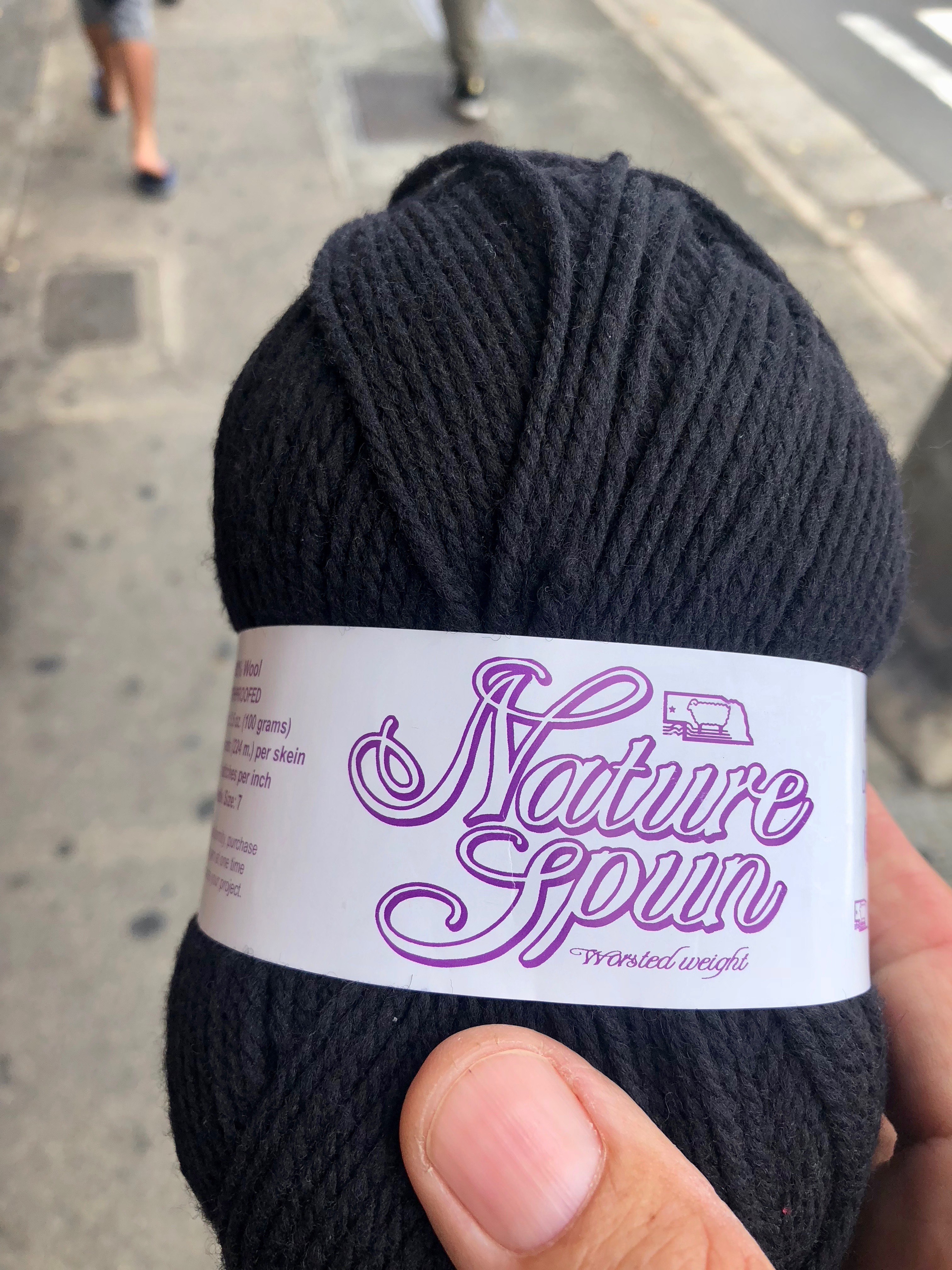
I’ve got to track down velvet tape, that might be a little harder. Turns out part of the problem with the wool was that Australia, the origin of the wool yarn in the article I read uses different terminology than we in the U.S.A. do for the same things. Might be the same with velvet tape. [And it is…velvet ribbon here…easy enough.]
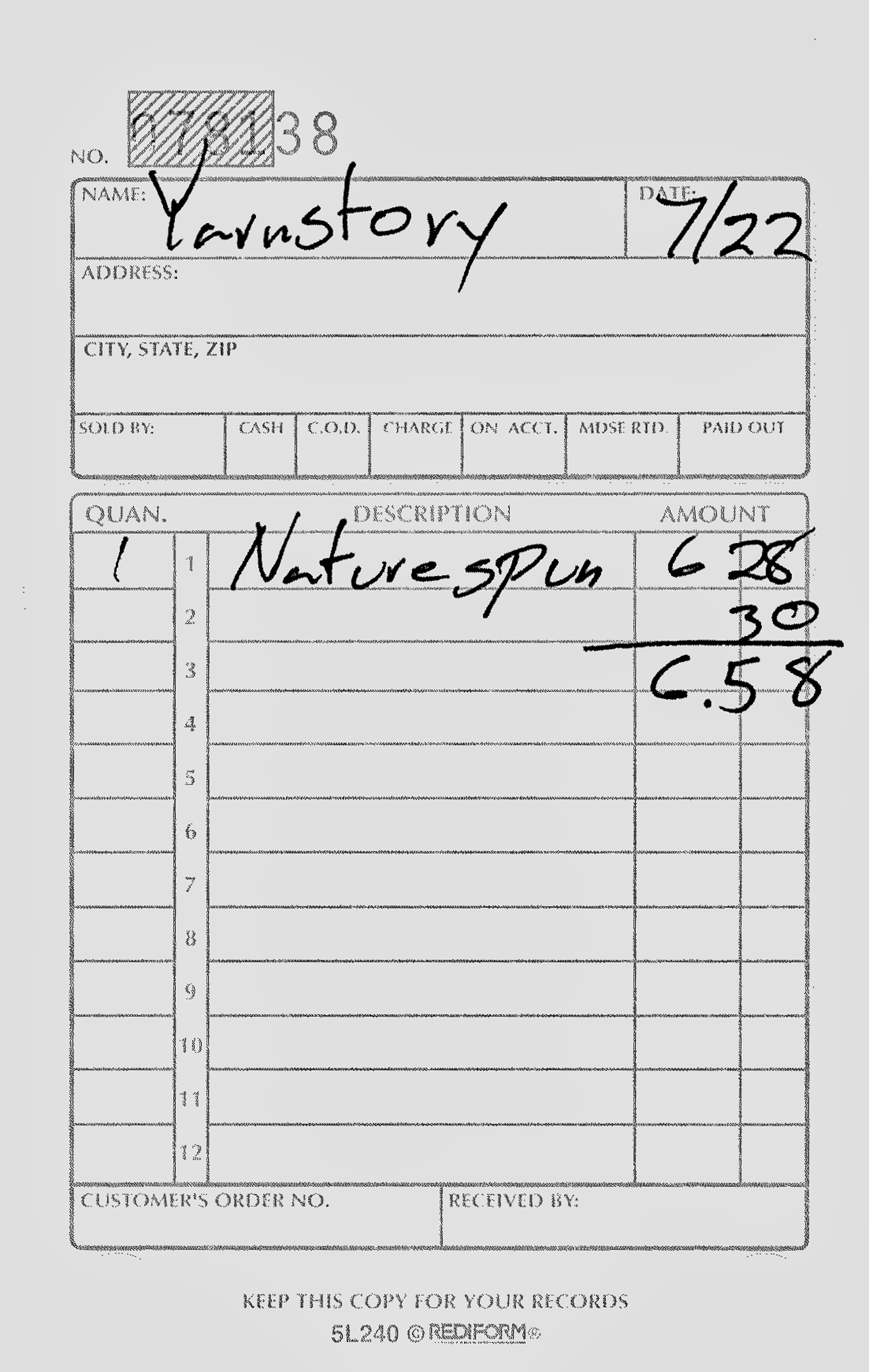
In any case, for $6.58 I have enough black wool yarn to seal every old camera I own or am ever likely to own…even if I go nuts on eBay (which happens).
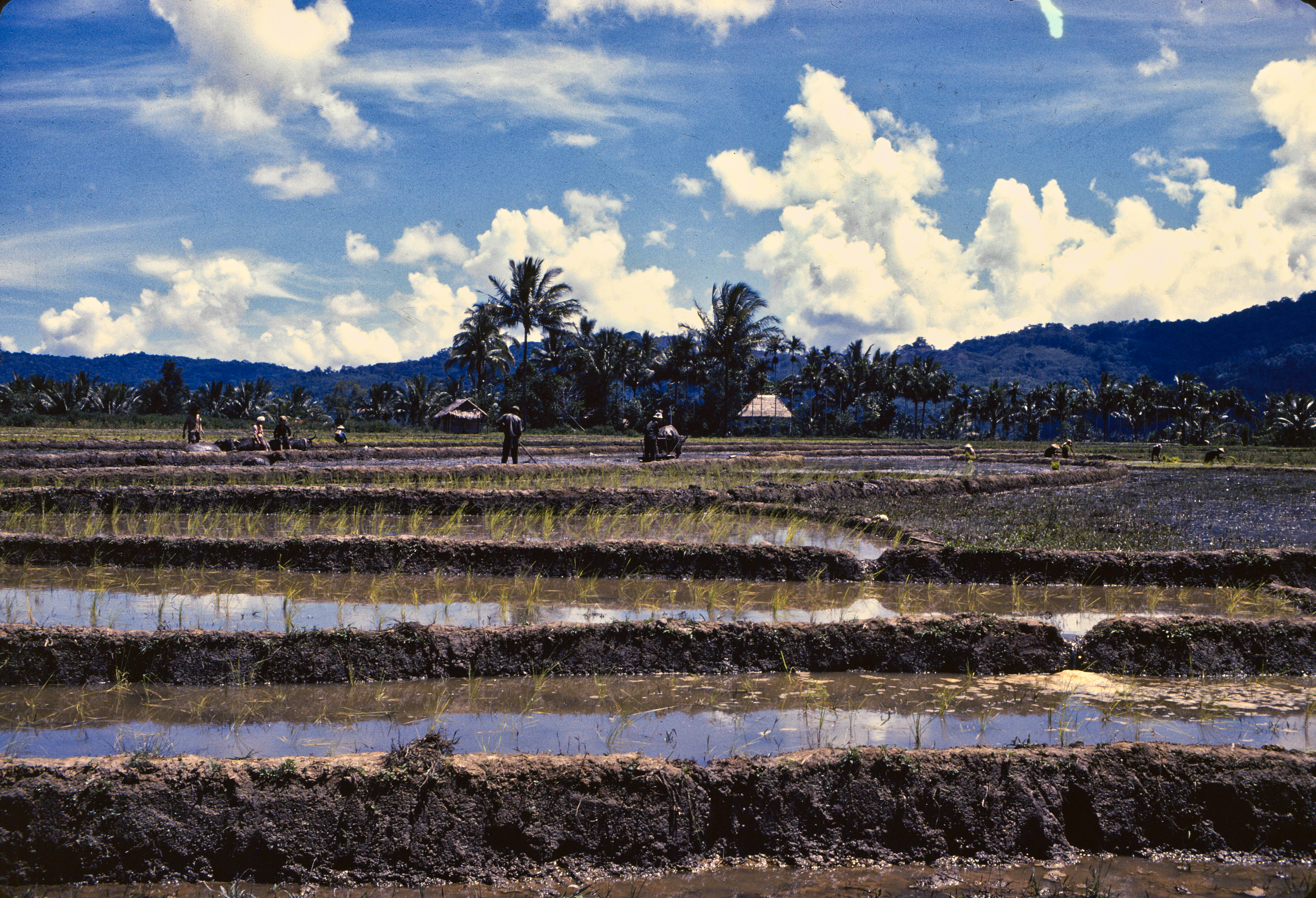
Another rice paddy…
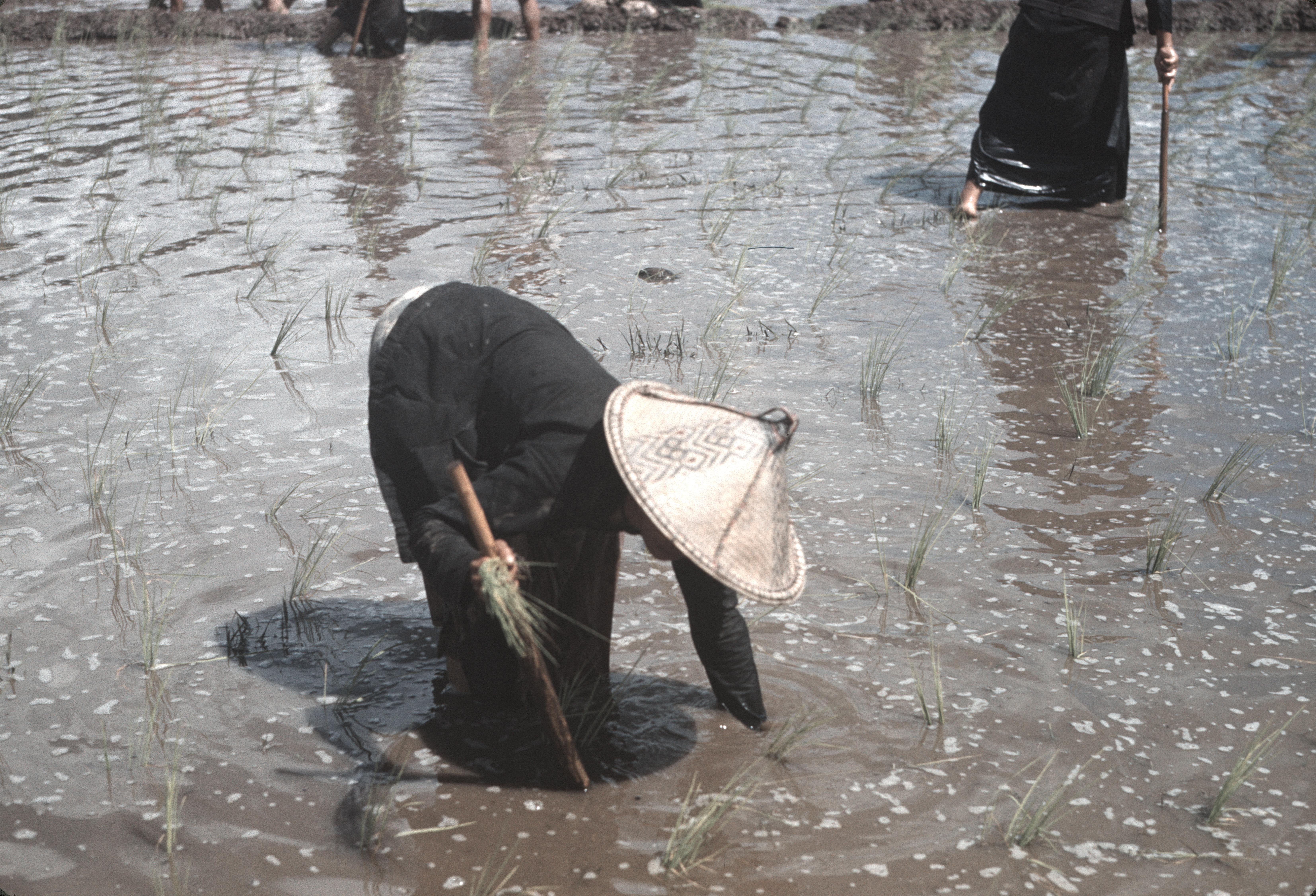
I’m quite sure many of the photos in my dad’s box of slides are going to show…um…rice. And yep, here’s another. This one is a from a marked slide that has no companions.
My process so far, just in case you’re interested. I’ve taken all the slides and sorted them by type of film label: Kodachrome & Ektachome. Next I used the fonts on the slide labels to sort them into separate groups. Finally I checked for any handwritten or printed notes on the slide holder to sort them yet again.
I’ve started with scanning the slides that are in sets, but small ones. There’ll be some much bigger jobs coming up and most likely I will not be posting them one by one…a big batch will probably be a better deal. After all, gentle reader, a thousand pictures of rice paddies might be interesting to some, but for most, one is pretty much like another.
On the other hand, my experiences of riding past cornfield after cornfield in Iowa on RAGBRAI lead me to…but that’s another story for another time.
The Women…
My dad had an eye, that’s for sure. Here’s a lovely composition of three generations of women having a moment of rest in the fields.
I’m not sure what’s going through the child’s mind, but if it were me I’d probably be thinking, “You aren’t seriously expecting me to work in this field.” The answer would most likely be yes, an answer delivered firmly yet tenderly.
I love the fabrics in this shot, especially how differently they are all dressed.
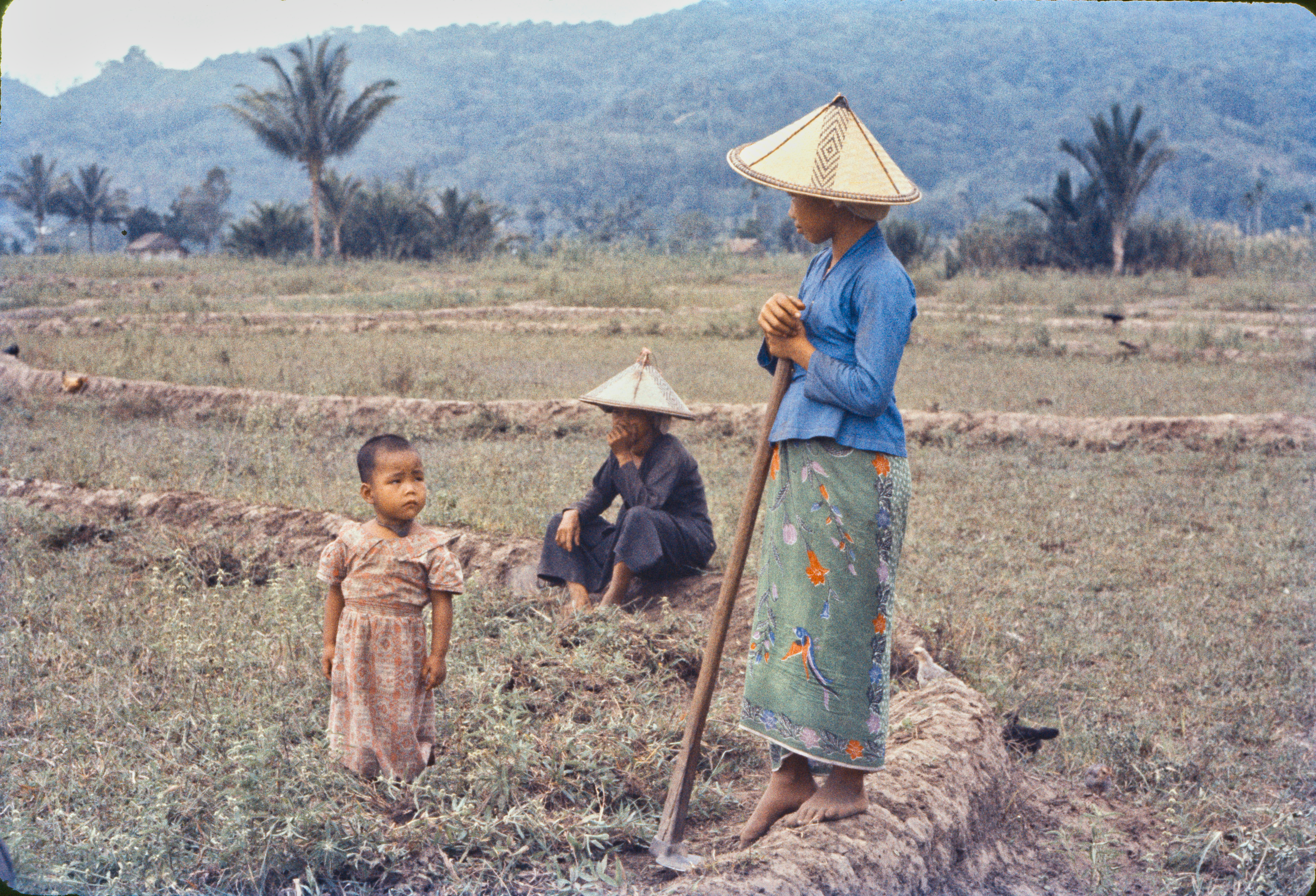
The date on this slide is October, 1963. While that’s the date of the processing, it definitely places closer to the end of our stay. I’m wondering if, as my dad’s language skills improved, if he had an easier time putting people at ease when making images.
I do, in odd moments, wish my parents had continued speaking Dusun and Malay at home when we returned, there’s a chance I might have retained more than how to count to ten. Moot point I suppose, though I’ll admit on a couple of trips to Indonesia in later life I definitely recognized more than I expected; Indonesian being a “trade” Malay to some extent.
Travel in the time of cholera…
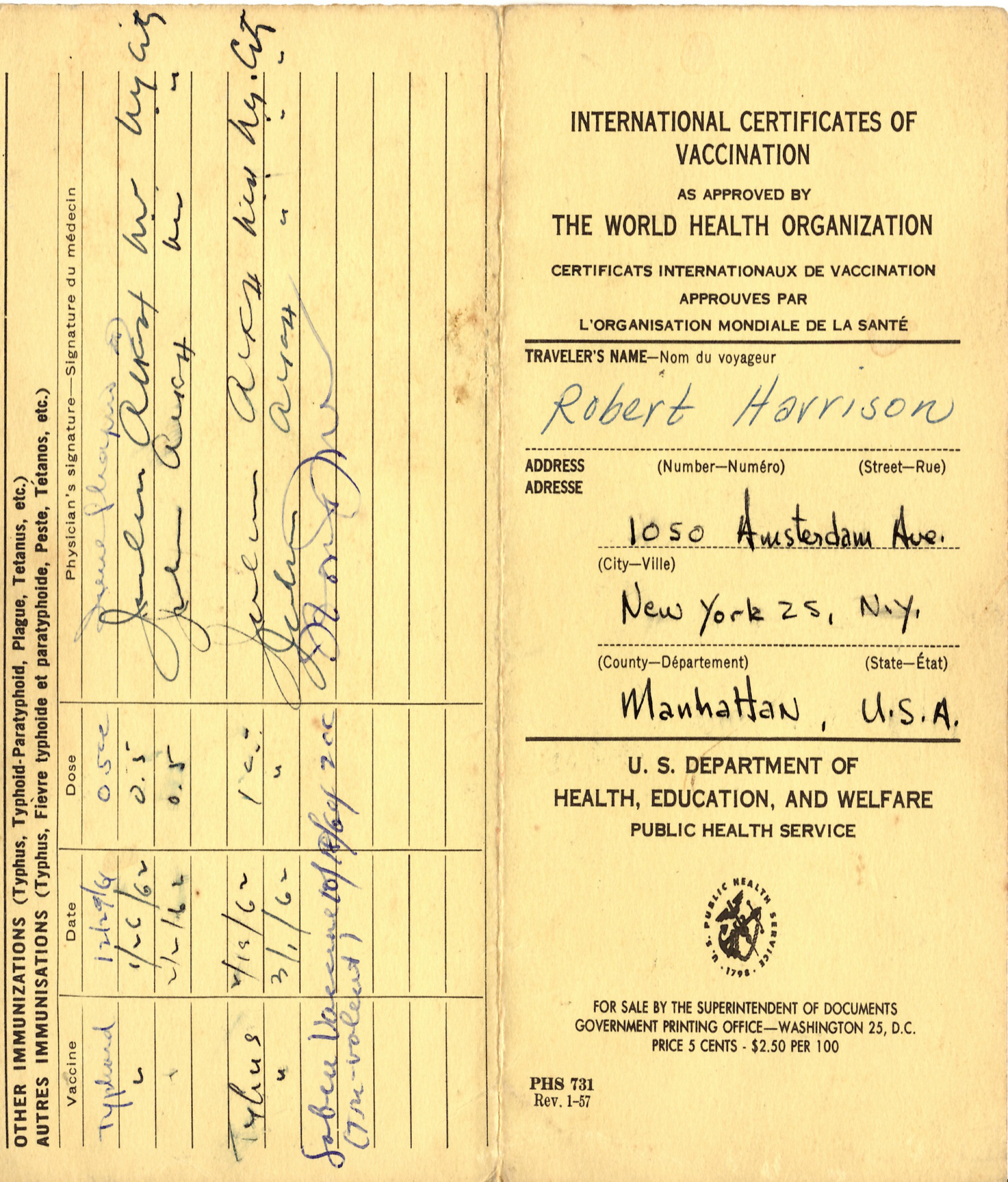
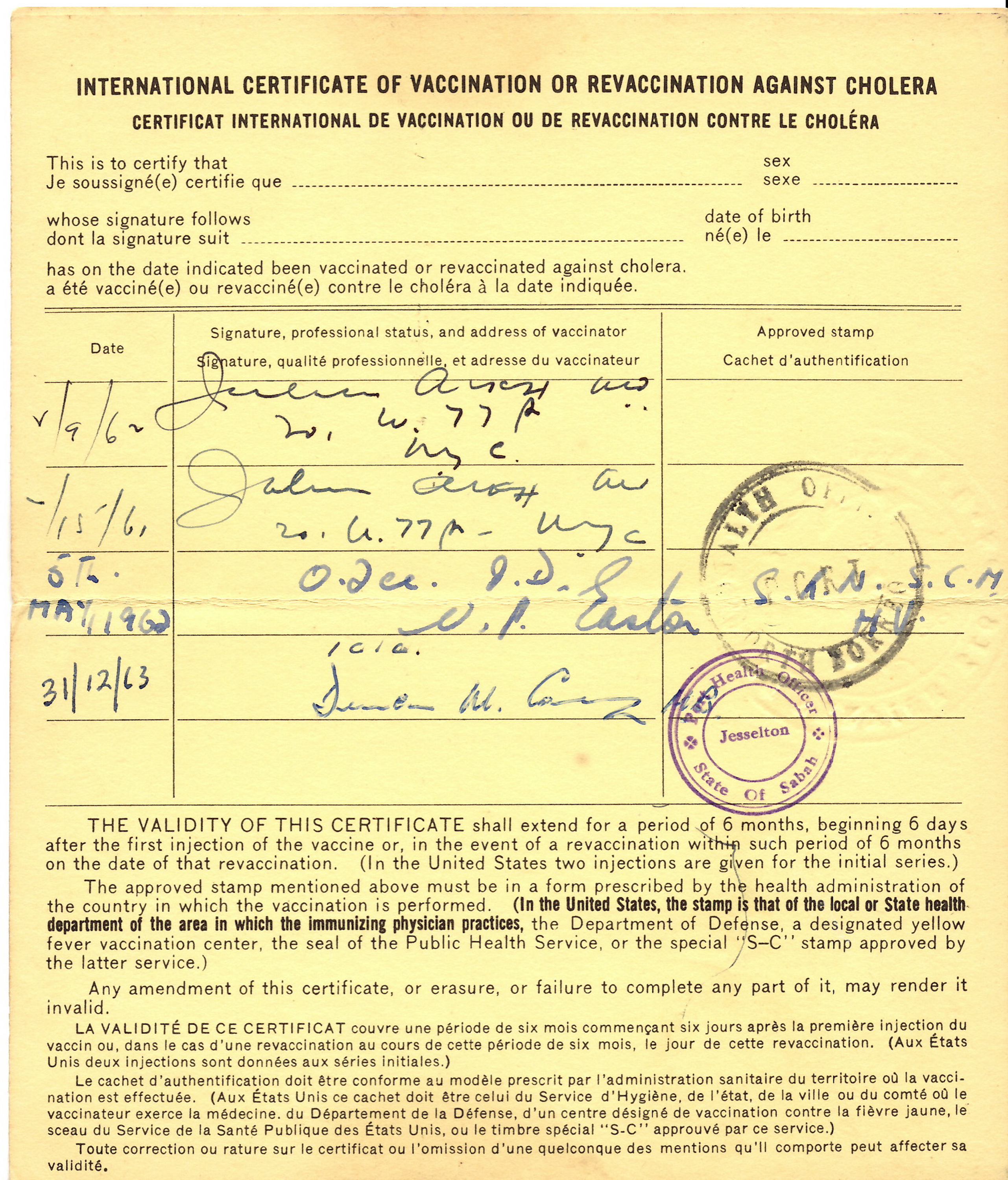
Of course, passports aren’t all that’s necessary to go traveling, at least not in the early sixties. My own experience of all the shots I had to get can best be summed up with this story.
When I was back in the US, Hawaii in fact, around the age of nine, I had an ear ache. It seemed I had some sort of infection and that was back in the day of prescribing antibiotics for just about everything. Probably not a good idea, but generally, in about 5-10 days you were better, with or without the shot I suppose.
They also used to give you the shots in the bum if you were child. Not my favorite thing, but there you go. In any case, the nurse began to talk soothingly saying I was going to feel just a little sting, like a bee. I smirked. The nurse, questioning my lack of participation in her fantasy was addressed by my mom. “Go ahead, just give him the shot. He was a human pincushion at age four. It’s fine.”
It’s true. I had a lot of shots to be allowed overseas.
My dad too. I suspect my mom did as well…but I’ve no proof nor memory. Here’s my dad’s vaccination card proving he’d been poked, prodded, and pincushion.
Passport…
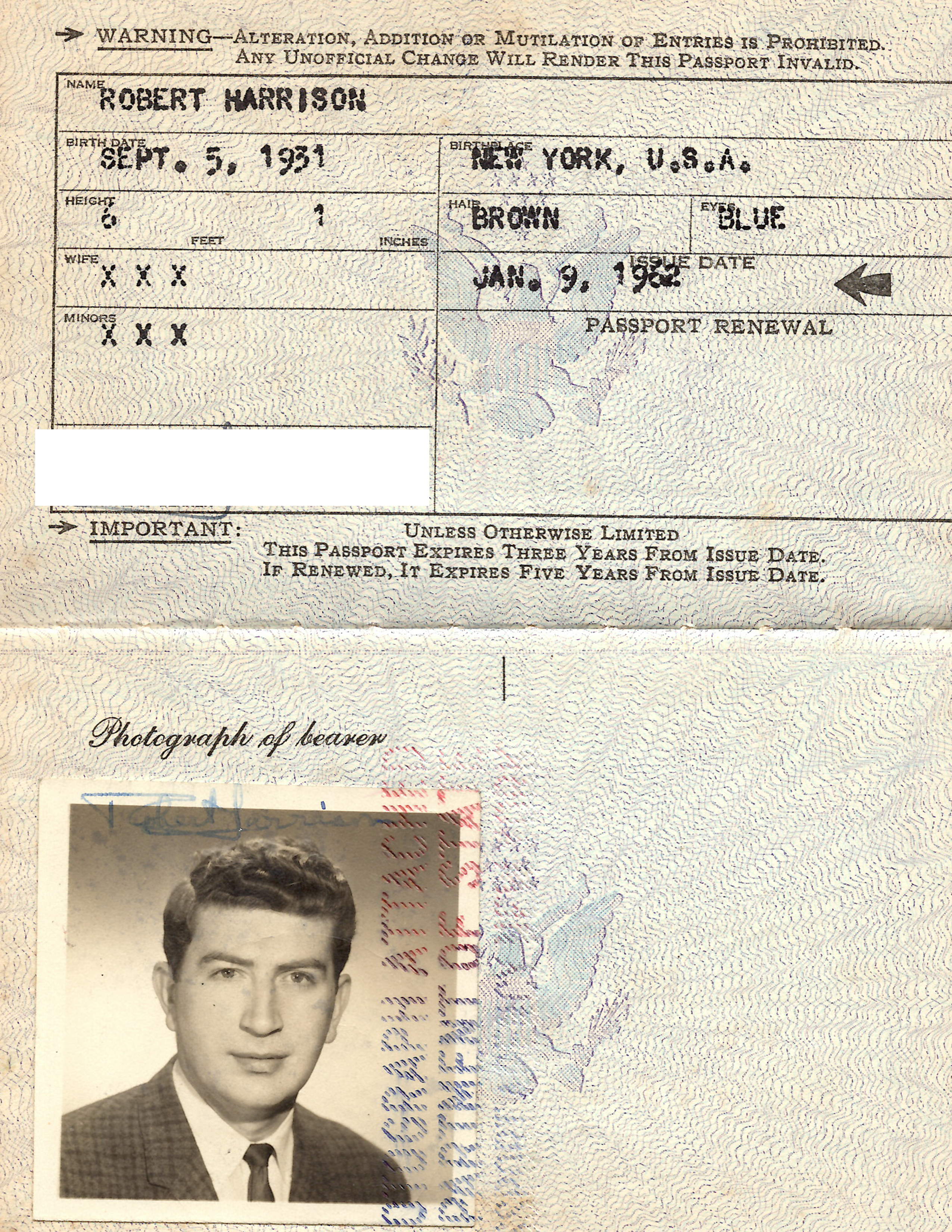
Earlier I mentioned my dad’s passport. It is, of course, quite expired, but it has held up well all these years. I’m not quite sure how given the, let’s just say, uneven nature of my life twixt Borneo and now.
If you are wondering how to picture my dad during this time, check out the scan of his passport (sans ID number and signature). Most of his life, at least with me, he wore a full beard and that’s really how I remember him.
I’ll be tracking our journey using the visa stamps later on, but for now, here’s my dad as he appeared in early 1962.
More rice planting…
There must be some universal law that states, “nothing is ever complete.” Yesterday’s last post on Rice Planting is a case in point.
This morning I woke up early, as I do, and spent a moment or two looking at my dad’s old passport. I can now trace our journey to and from Borneo pretty well and I’ll have a post on that later.
The incompleteness of yesterday’s post turned up in the passport when another couple of slides fell out, one belonging to the same set I posted yesterday.
Without further ado, here’s the fourth and final (or not) photo in that series of slides.